Menu Close

Category: Kids Play Center

Top Benefits of Choosing a Kids Birthday Party Venue DFW for Child Development

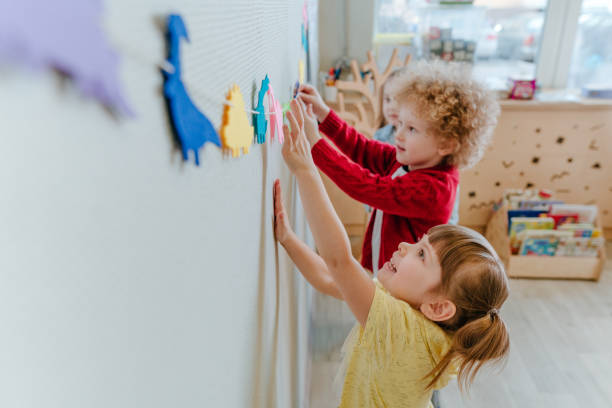
Preschool students playing in kindergarten with color dinosaur figures Preschool students playing in kindergarten with color dinosaur figures on the wall. Selective focus. Kids Play Center stock pictures, royalty-free photos & images

Play is more than just a source of entertainment for children—it is a fundamental aspect of their development. Through play, children learn essential skills and gain experiences that shape their physical, emotional, cognitive, and social well-being. Understanding the benefits of play can help parents and caregivers foster an environment that supports healthy growth.

Physical Development

Active play helps children develop essential motor skills and build physical strength. Engaging in running, jumping, climbing, and other physical activities improves their coordination, balance, and overall fitness levels. Key benefits include:
Fine motor skills: Activities like puzzles or stacking blocks enhance hand-eye coordination and finger dexterity.
Gross motor skills: Sports or playground activities promote core strength and agility. – Healthier habits: Regular movement reduces the risk of sedentary lifestyle-related issues like obesity.

Cognitive Development

Play stimulates brain development by encouraging curiosity and problem-solving. It allows children to explore new ideas and concepts in creative ways. Benefits to cognitive growth include: – Improved memory retention through games that require recall. – Enhanced critical thinking while solving puzzles or engaging in strategy-based activities. – Development of spatial awareness through building blocks or drawing.

Social Skills

Through interactive play with peers or adults, children learn valuable social skills such as cooperation, communication, and empathy. These interactions teach them how to navigate relationships effectively: – Sharing toys encourages teamwork. – Role-playing games help them understand different perspectives. – Conflict resolution arises during group play when disagreements occur.

Emotional Growth

Play provides children with opportunities to express themselves freely in a safe space. This contributes to emotional resilience as they explore feelings like joy, frustration, or accomplishment: – Pretend play allows them to process emotions by acting out scenarios. – Winning or losing teaches emotional regulation while fostering sportsmanship. – Creative outlets such as art-based activities offer self-expression opportunities.

Table: Play Types & Associated Benefits

Type of Play Benefit Examples
Free Play Encourages creativity & decision-making Imaginative games
Structured Play Builds discipline & goal-setting Board games
Physical Play Develops strength & coordination Tag, obstacle courses
Cooperative Play Fosters teamwork & collaboration Sports teams

Why Prioritizing a Kids Play Center Matters

By incorporating diverse forms of play into daily routines at home or through kids’ play centers, families can help nurture all aspects of child development holistically.

How an Indoor Playground DFW Benefits Children’s Growth and Well-Being

1. Promotes Physical Health

Engaging in active play helps children maintain their physical health by improving their strength, coordination, and motor skills. Activities such as running, climbing, or jumping not only burn energy but also support muscle development and cardiovascular health.

  • Climbing walls
  • Dancing
  • Playing tag
  • Building blocks
  • Puzzles
  • Arts and crafts

Regular movement during play reduces the risk of childhood obesity while fostering an early appreciation for an active lifestyle.

2. Supports Cognitive Development

Play allows children to think critically, solve problems creatively, and develop decision-making skills.

  • Pretend games often require children to think through different scenarios.
  • Role-playing promotes imaginative thinking.
  • Board games that challenge recall.
  • Story-based activities requiring attention to details.

When children engage in purposeful play activities, they simultaneously build neural connections that promote logic and reasoning.

3. Encourages Emotional Regulation

Free play provides a safe outlet for children to express their emotions without judgment. Whether they are role-playing scenarios or engaging in group activities with peers, they learn to process feelings such as frustration or excitement effectively.

Key benefits include: – Improved coping mechanisms when facing challenges. – Better understanding of empathy through interactions during imaginative or cooperative play.

This emotional awareness ultimately helps foster resilience.

4. Builds Social Skills

  • Cooperation: Working together toward a shared goal during team-based games teaches patience and collaboration.
  • Communication: Playing side-by-side allows kids to practice verbal and non-verbal communication effectively.
  • Conflict resolution: Disagreements over rules or turns provide valuable lessons in negotiation and compromise.

5. Reduces Stress

Lastly, engaging in unstructured or guided play helps reduce stress levels in young minds by releasing endorphins (hormones associated with happiness). Whether it’s spending time at a kids’ play center or playing outside with friends, having fun offers much-needed mental relaxation amidst academic pressures.

Activity Type Stress Relief Benefits Examples
Free outdoor play Exposure to fresh air calms the mind Running around at parks
Structured indoor play Fosters focus while reducing anxiety Participating in obstacle courses

By incorporating diverse kinds of playful activities into daily routines, caregivers lay a strong foundation for well-rounded child development while ensuring that learning remains enjoyable throughout their formative years.

How Imaginative Play Sparks Creativity and Problem-Solving in Kids

Imaginative play, often referred to as pretend play or make-believe play, is a vital aspect of childhood development. It allows children to explore their creativity, build critical thinking skills, and develop problem-solving abilities in a natural and engaging way. By participating in imaginative scenarios, children not only entertain themselves but also learn how to navigate the world around them.

The Role of Imaginative Play in Creativity

  • Creating Stories: Children often develop elaborate narratives while playing pretend. For instance, they may act out roles such as a doctor, astronaut, or superhero.
  • Using Everyday Objects Creatively: A cardboard box becomes a spaceship; a simple stick transforms into a magic wand.
  • Artistic Expression: Imaginative play often involves drawing maps for treasure hunts or designing costumes for play characters.

By engaging in these activities, kids strengthen their ability to innovate and express themselves artistically.
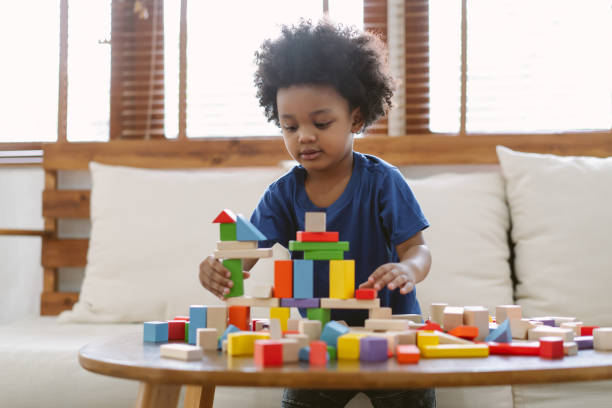
Little African american boy building a small house with colorful wooden blocks in living room at home. Educational toys for preschool and kindergarten children. Little African american boy building a small house with colorful wooden blocks in living room at home. Educational toys for preschool and kindergarten children. Kids Play Center stock pictures, royalty-free photos & images

How Imaginative Play Supports Problem-Solving Skills

  • Role-Playing Scenarios: Acting out real-life situations (e.g., running a store or hosting a tea party) forces kids to make decisions about how things operate.
  • Conflict Resolution: Playing with others introduces social challenges like sharing toys or taking turns. Children learn negotiation techniques and compromise during cooperative activities.
  • Planning and Strategy Development: Activities like building forts or creating imaginary towns require planning steps and overcoming obstacles.

By practicing these skills in low-pressure environments during playtime, children gain confidence when solving problems in real-life situations.

Examples of Imaginative Play Activities for Kids

Activity Key Benefits Materials Needed
Dress-Up/Role Play Encourages self-expression; builds empathy by understanding others’ roles Old clothes; accessories
Building Blocks Develops spatial awareness; fosters engineering concepts LEGO sets; wooden blocks
Pretend Cooking/Baking Enhances organizational skills; sparks imagination about daily routines Toy kitchen sets; modeling clay
Storytelling/Dramatic Play Develops narrative-building skills; enriches vocabulary Puppets or stuffed animals

Encouraging these activities at home or within structured environments like kids’ play centers can maximize their developmental benefits.

Tips for Supporting Imaginative Play

  1. Provide open-ended toys that encourage exploration rather than limiting use (e.g., blocks instead of preassembled figures).
  2. Set aside unstructured time where children lead their own activities without imposed rules.
  3. Join occasionally as collaborators without directing the flow—let your child guide you into their imaginary world.
  4. Rotate toys regularly so kids remain engaged with fresh possibilities.

By supporting imaginative play thoughtfully, adults can give kids the tools they need to grow into innovative thinkers who approach challenges with enthusiasm and ingenuity.

Enhancing Cognitive Development at a Kids Indoor Playground

Engaging play activities are essential in nurturing a child’s cognitive development. Play provides children with the opportunity to explore, experiment, and learn in ways that are both enjoyable and impactful. Structured and unstructured play can stimulate critical thinking, enhance memory, and improve problem-solving skills. By offering a variety of enriching activities, caregivers and educators can help children develop the mental tools needed to succeed academically and socially.

How Play Encourages Cognitive Development

  • Problem-Solving: Many games require children to solve puzzles or strategize solutions, which helps them think critically and make decisions.
  • Memory Enhancement: Activities that involve repetition or memorization, such as matching games or singing songs with hand motions, build memory skills.
  • Language Development: Playing with others often involves communication. Whether through storytelling or role-playing games, kids develop language proficiency as they engage.
  • Focus and Attention: Games requiring concentration—such as board games or building blocks—help children develop better focus.

Table of Activities and Their Benefits

Activity Description Cognitive Benefit
Puzzle Solving Solving jigsaw puzzles of varying difficulty Improves spatial awareness and problem-solving
Building Blocks Constructing structures using blocks like LEGO Enhances creativity and fine motor skills
Memory Matching Games Pairing cards with matching images or patterns Boosts memory retention
Role-Playing (e.g., pretend) Acting out scenarios such as playing doctor or chef Develops communication skills
Pattern Recognition Identifying patterns in beads or objects Strengthens logical reasoning

Benefits of Mixing Structured and Unstructured Play

  1. Provides clear goals (e.g., completing a puzzle).
  2. Teaches rules and discipline.
  3. Encourages collaboration if done in groups.
  4. Sparks creativity by letting kids imagine their own scenarios.
  5. Offers freedom for self-directed learning.
  6. Builds resilience through trial-and-error experiences.

Tips for Creating an Enriching Play Environment at Home

  • Designate a dedicated “play corner” stocked with educational toys like puzzles, building sets, or memory cards.
  • Rotate toys regularly to maintain interest while introducing new challenges.
  • Encourage outdoor exploration by providing tools like magnifying glasses for nature observation.
  • Engage alongside your child during play sessions to guide their learning experience without taking control.

By prioritizing diverse engaging activities tailored to children’s developmental stages, parents and caregivers can foster robust cognitive growth while ensuring that every moment of play becomes a valuable learning experience.

Emotional and Social Benefits of Play for Children

Play is an integral part of a child’s emotional and social development. Engaging in play activities not only allows children to have fun but also helps them build critical life skills, such as communication, empathy, teamwork, and problem-solving. Below are some key ways play contributes to emotional and social growth.

Enhancing Communication Skills

Through play, children learn to express their thoughts, emotions, and needs more effectively. Whether they are role-playing with peers or working together on a group task, they develop essential verbal and non-verbal communication abilities.

  • Listening: During group activities or pretend play scenarios, children practice listening to others’ ideas.
  • Articulation: Explaining rules or negotiating roles encourages clear verbal expression.
  • Nonverbal Cues: Role-playing enhances understanding of body language and facial expressions.

Building Empathy and Emotional Awareness

Interactive play fosters the development of empathy by encouraging kids to consider other perspectives. Pretend scenarios often require them to step into someone else’s shoes, which builds their emotional intelligence.

  • Recognizing and responding to peers’ emotions during cooperative games nurtures sensitivity.
  • Conflict resolution in group settings teaches patience and compromise.
  • Successes or setbacks during games help children build emotional resilience.

Strengthening Teamwork Skills

Collaborative play activities cultivate teamwork by requiring kids to work together toward a shared goal. Whether constructing a tower from blocks or participating in a scavenger hunt, they learn the value of cooperation and shared responsibility.

Key benefits include:
| Skill | Example Activity | Outcome | |——|——————|———| | Cooperation | Group art project | Learning to share resources | | Leadership | Leading a team game | Building confidence as a leader | | Following Directions | Relay races | Understanding the importance of structure |

Encouraging Positive Social Interactions

Frequent interaction during playtime helps children refine social behaviors such as taking turns, sharing resources, and respecting others’ boundaries. Kids who engage in regular social activities with peers tend to navigate real-world interactions more comfortably later in life.

Happy children playing together with a nanny at an amusement park. Excited kids playing together on net ropes. Cute school kids playing on the colorful playground at a shopping mall Happy children playing together with a nanny at an amusement park. Excited kids playing together on net ropes. Cute school kids playing on the colorful playground at a shopping mall Kids Play Center stock pictures, royalty-free photos & images

Key Activities for Social Skill Development:
  • Board Games: Teach turn-taking and rule-following.
  • Group Sports: Encourage collaboration while promoting healthy competition.
  • Fantasy Play (e.g., dress-up): Fosters imaginative dialogue and peer bonding.

Emotional Regulation Through Play

Play serves as an outlet for children to process emotions like frustration or excitement in healthy ways. For example: – Physical play (e.g., running games) can help manage energy levels. – Creative activities like drawing or modeling clay may provide calming effects for anxious kids. – Story-based role-play allows them to explore diverse feelings in safe environments.

By prioritizing opportunities for both structured and unstructured play at home or in group settings like kids’ play centers, families can provide the foundation needed for strong emotional health and meaningful social connections.

Encouraging Healthy Independence Through Fun and Interactive Play

Encouraging independence in children is a crucial part of their development, as it helps them build confidence, enhance decision-making skills, and foster responsibility. Kids’ play centers offer an environment that nurtures these traits in a safe and engaging way. Through fun and interactive activities, children can explore their abilities while learning to navigate the world independently.

Benefits of Promoting Independence Through Play

  • Confidence Building: When children are encouraged to make decisions during play, they begin to trust their instincts and abilities.
  • Problem-Solving Skills: Interactive games often require kids to solve challenges or puzzles on their own.
  • Skill Development: Activities like climbing, building blocks, or role-playing allow children to master new tasks at their own pace.
  • Sense of Responsibility: Learning the value of teamwork through group games teaches accountability while fostering independence.

Key Activities That Promote Independence at Play Centers

  1. Encourage self-assessment as children figure out how to navigate through challenges.
  2. Teach perseverance when faced with difficult tasks.
  3. Features like pretend grocery stores or kitchens let kids act out real-world scenarios independently.
  4. Develop leadership skills when taking initiative in role assignments with peers.
  5. Activities involving blocks or construction toys emphasize self-directed creativity.
  6. Enhance spatial reasoning as they plan structures on their own.
  7. Craft areas encourage artistic expression and allow kids to make decisions about materials and designs.
  8. Help strengthen focus and attention span by working independently on projects.
Activity Skills Developed Level of Independence Encouraged
Obstacle Courses Problem-solving, Perseverance High
Role-Playing Stations Leadership, Decision-Making Moderate
Building Stations Creativity, Spatial Reasoning High
Creative Arts Corners Focus, Artistic Expression Moderate

How Parents Can Support Independent Play at Centers

  • Allow children the freedom to explore activities without constant supervision but remain nearby for support if needed.
  • Praise efforts rather than outcomes to build intrinsic motivation.
  • Encourage participation in group activities that promote both teamwork and individual contributions.

By creating an environment where fun meets learning, interactive play not only entertains but also supports the journey toward healthy independence in children.

How Kids’ Play Centers Promote Physical Fitness and Active Lifestyles

Kids’ play centers are more than just spaces for entertainment; they are vital environments where children can engage in physical activities that contribute to their overall health and well-being. These centers are designed to encourage movement, enhance coordination, and build lifelong habits of an active lifestyle. Below, we explore how kids’ play centers serve as catalysts for fitness and active living.

Opportunities for Physical Activity

  • Climbing Walls: Improves strength, coordination, and balance.
  • Obstacle Courses: Encourages agility and quick decision-making while promoting cardiovascular endurance.
  • Ball Pits: Facilitates safe movement, hand-eye coordination, and upper-body strength.
  • Slides and Tunnels: Enhance gross motor skills by encouraging climbing and crawling movements.
  • Trampolines or Bounce Areas: Boosts cardiovascular fitness while improving balance and core control.

These activities not only make exercise enjoyable but also help children stay engaged for longer periods.

Developing Motor Skills

Activity Motor Skill Developed Example Equipment
Running or Chasing Games Gross motor skills Open play areas
Building Blocks Fine motor skills Block zones
Swinging Core strength & coordination Swings

These activities naturally allow children to practice essential movements without feeling like it’s a structured workout routine.

Promoting Cardiovascular Fitness

Active play stimulates the heart rate, which is essential for cardiovascular development in growing children. High-energy games such as hide-and-seek tag or foam dodgeball promote endurance while ensuring kids stay entertained.

Moreover, the availability of diverse physical challenges in a controlled environment motivates children to be more active compared to sedentary habits like screen time.

Social Interaction Through Fitness

Play centers often feature group-based activities that teach cooperative play while keeping kids moving. Participating in team games like relay races or group obstacle courses helps kids learn teamwork while staying physically active.

Examples include:
– Relay races that involve running or hopping toward a target. – Tug-of-war competitions promoting both strength and camaraderie. – Group dance workshops hosted within play areas.

These shared experiences promote social bonding alongside physical fitness.

Fostering Long-Term Active Habits

By associating fun with physical activity from a young age, play centers instill positive attitudes toward exercise. This foundation is pivotal in developing lifelong habits of staying fit and healthy into adolescence and adulthood. Parents who bring their children to these centers also model healthy behaviors by prioritizing physical wellness, reinforcing these values within family dynamics.

Encouraging visits to these dynamic environments not only benefits children’s immediate health but also establishes routines critical for long-term well-being—a win-win for both parents and their little ones alike!


The Best Kids Birthday Party Venue DFW: Where Fun Meets Learning

Man catching little girl while standing near slide at playground. Handsome dad catching cheerful daughter, riding on slide at modern courtyard of city residential high-rise buildings. Bearded father catching pretty girl while standing near slide on playground. Kids Play Center stock pictures, royalty-free photos & images

Boosting Confidence Through Exploration

Indoor playgrounds provide opportunities for kids to explore new challenges:
Age-Appropriate Equipment: Play structures such as climbing walls, slides, and tunnels are scaled to fit different age groups. This allows children to conquer obstacles at their own pace.
Risk-Free Environment: Unlike outdoor play areas, indoor playgrounds offer padded floors and safety measures that encourage kids to try new activities without fear of injury.
Personal Milestones: Whether it’s climbing higher than they thought possible or navigating a tricky maze, achieving small victories helps children feel accomplished.

Developing Social Skills in Group Play

Play centers bring together kids from diverse backgrounds, providing rich opportunities for collaborative learning. Here’s how they foster social development:
1. Making New Friends: Shared playtime naturally introduces children to peers they might not encounter otherwise. This helps them practice initial interactions like introducing themselves or initiating conversations.
2. Taking Turns and Sharing: Activities such as waiting for a turn on the slide or sharing toys teach patience and the importance of collaboration with others.
3. Problem-Solving Together: Many indoor playgrounds include interactive features like puzzles or group games that encourage teamwork while building critical thinking skills.

Structured vs Free Play Opportunities

Type of Play Benefits
Structured Play Builds cooperation by encouraging participation in guided group activities
Free Play Enhances creativity by allowing kids to set their own rules

Emotional Growth Through Social Interaction

Navigating relationships with other children during playtime often leads to emotional growth in several key areas:
Building Empathy: Interactions help children understand others’ perspectives through shared experiences. – Handling Conflict: Disagreements during group activities challenge kids to find solutions respectfully. – Emotional Regulation: Indoor spaces create a controlled environment where children learn how to manage excitement, frustration, or disappointment during interactions.

The Lifelong Benefits of Early Socialization at a Kids Play Center

When provided with safe environments like indoor playgrounds, early socialization experiences become a cornerstone for lifelong skills such as adaptability and cooperation. By participating regularly, children not only grow into more confident individuals but also develop the tools needed for positive relationships both inside and outside of school settings.

A Welcoming Environment for Gradual Interaction

Shy children often feel hesitant in large, open spaces or crowded environments. Indoor playgrounds are designed with multiple zones that cater to different levels of activity and engagement.
Quiet corners: Many play centers feature calm areas with books, puzzles, or sensory toys where kids can ease into the environment at their own pace.
Small group play opportunities: Structured activities like arts and crafts or interactive games allow shy kids to engage in smaller, more manageable social settings.

By starting small and progressing gradually toward larger group interactions, children can gain confidence over time.

Encouraging Risk-Taking Through Play

Shy children often avoid activities that may put them in the spotlight or test their abilities. Indoor playgrounds offer opportunities to safely take calculated risks in a supportive atmosphere:
Obstacle courses test physical abilities and problem-solving skills while allowing kids to achieve personal milestones without pressure from peers.
Climbing walls or slides enable children to push their boundaries in a way that feels exciting rather than intimidating.

When these risks are met with positive reinforcement—whether it’s applause from parents or smiles from new friends—children learn that stepping outside their comfort zone can be rewarding.

Opportunities for Social Growth

For shy kids who struggle to initiate conversations or build relationships, indoor play centers act as a natural facilitator of social interaction:
– Many activities involve cooperative play, such as building structures with blocks or participating in group games like hide-and-seek. These moments encourage teamwork and casual conversation among peers. – Non-verbal communication skills are developed through interactive play equipment like seesaws, balance beams, or shared sensory tables.

Through repeated exposure to these scenarios, shy children gradually become more comfortable interacting with others.

Supportive Role of Caregivers and Staff

The presence of skilled staff members at indoor playgrounds is an underappreciated resource for shy children:
| Role | Contribution | Example Activities |
|——|————–|——————–| | Staff/Facilitators | Provide encouragement & guidance during play | Leading group storytime sessions | | Parents/Caregivers | Offer reassurance while giving space for independence | Observing from nearby seating areas |

This dual layer of support ensures that children feel safe enough to try new things but independent enough to grow emotionally.

Benefits Beyond the Playground

The progress a shy child makes inside an indoor play center extends far beyond its walls: 1. Improved self-esteem: Accomplishing small goals within the playground builds confidence over time. 2. Better peer relationships: As they grow bolder socially, previously reserved kids may begin forming meaningful friendships. 3. Resilience development: Overcoming fears associated with physical challenges fosters perseverance and adaptability.

By creating safe spaces tailored for exploration and gradual growth, indoor playgrounds serve as invaluable tools for helping shy children develop boldness both socially and emotionally.

The Quiet Power of Play in Developing Emotional Resilience in Children

Play is a foundational activity that not only entertains children but also helps shape their emotional well-being. In particular, unstructured play within a kids’ play center environment provides a unique setting for children to develop emotional resilience – the ability to manage emotions, adapt to challenges, and recover from setbacks. Emotional resilience is a critical life skill that supports mental health and equips children to face various situations as they grow.

How Play Builds Emotional Resilience

  • Problem-Solving Opportunities: Many activities in indoor play centers, such as climbing walls or obstacle courses, require children to think critically and overcome challenges. These small “wins” build their confidence and teach them perseverance.
  • Risk-Taking in a Safe Setting: Play areas provide carefully designed spaces where kids can take risks – like climbing higher or navigating tricky equipment – without fear of failure or harm. Trying new things in these controlled environments helps them deal with fear and uncertainty.
  • Role-Playing Scenarios: Interactive zones like pretend kitchens, dress-up areas, or creative corners allow kids to explore different emotions through imaginative role-playing. This activity can help them understand complex feelings like empathy, frustration, or joy.

Social Interaction as a Key Component

  • Learning to Handle Disagreements: Kids may face minor conflicts during group play – for example, taking turns on the slide or sharing toys. Navigating these disputes teaches skills like compromise and patience.
  • Dealing with Competition: Games like relay races or timed challenges introduce friendly competition. Learning how to win gracefully or accept loss builds an understanding of success and disappointment.
  • Encouragement from Peers: Positive reinforcement from friends during group activities boosts children’s morale and encourages compassionate behavior.

Benefits of Structured vs. Unstructured Play

Type of Play Characteristics Emotional Benefits
Structured Play Organized games/activities led by instructors Enhances teamwork skills; builds discipline
Unstructured Play Free exploration without strict rules Encourages creativity; fosters independence

While structured activities provide clear objectives that help develop focus and collaboration skills, unstructured free-play sessions offer space for spontaneous problem-solving and self-expression.

Kids riding scooters in city residential area. Kids riding scooters in city residential area. Sunny summer day. Nikon D850 Kids Play Center stock pictures, royalty-free photos & images

Creating an Emotionally Supportive Environment

  • Look for areas with both high-energy zones (e.g., trampolines) as well as calm zones (e.g., quiet reading nooks).
  • Ensure staff members are trained to handle minor conflicts between children positively.
  • Opt for spaces that encourage interactive group games alongside solo exploration opportunities.

Providing opportunities for meaningful play not only ensures your child has fun but also takes important steps toward building their mental resilience—an essential trait for navigating life’s ups and downs effectively.

How Independent Play Encourages Creativity and Problem-Solving in Kids

Independent play is a fundamental aspect of childhood development that fosters creativity and strengthens problem-solving skills. In environments like kids play centers, children are given the opportunity to explore, experiment, and make decisions on their own. This type of unstructured play allows kids to engage their imaginations, think critically, and face challenges without relying on constant guidance.

The Role of Independent Play in Boosting Creativity

  • Open-Ended Toys: Items like building blocks, art supplies, or pretend-play props encourage kids to create their own scenarios or build structures from scratch.
  • Make-Believe Scenarios: Role-playing as superheroes, doctors, or astronauts allows children to invent narratives and express themselves creatively.
  • Unstructured Time: Without rigid rules or schedules during playtime at a center, children have the space to initiate projects that draw from their creativity.
Activity Creativity Stimulation
Building with blocks Constructing new shapes or designs
Pretend cooking station Inventing recipes or kitchen scenarios
Dress-up roleplay Creating characters and storylines

Independent Play as a Platform for Problem-Solving

  • Building Structures: While trying to build a stable tower with blocks, kids figure out which shapes work together best.
  • Puzzles: Completing puzzles requires logical thinking and persistence.
  • Navigating Obstacles: In physical indoor playground setups like climbing walls or tunnels, children must evaluate how they can move efficiently through the space.

Children in these scenarios often learn patience and determination while understanding cause-and-effect relationships.

Benefits of Allowing Children Space for Independent Play

  1. Increased Self-Reliance
    Kids develop confidence by solving problems independently without adult intervention. They learn that they are capable of addressing challenges on their own.
  2. Enhanced Decision-Making Skills
    Making choices during independent activities teaches children how to evaluate options effectively.
  3. Improved Focus
    When immersed in an activity of their choosing, kids often experience deep concentration—a skill that translates into other areas like academics.
  4. Boosted Resilience
    Facing small setbacks (like a block tower falling) builds resilience as children persevere until they succeed.

How Kids Play Centers Promote Independent Play

  • Varied zones such as art areas, sensory sections, and obstacle courses cater to different interests.
  • The absence of structured activities gives children room for exploration at their own pace.
  • Safe environments with age-specific equipment ensure that kids can experiment confidently without unnecessary risks.

By allowing room for creativity while providing subtle challenges that require problem-solving skills, indoor playgrounds become ideal spaces where independent play thrives. Both parents and educators should recognize the value these moments hold in shaping well-rounded individuals who are innovative thinkers equipped with practical life skills from an early age.

Essential Life Skills Kids Learn at a Kids Indoor Playground

Play is a natural and powerful way for children to develop critical life skills. In kids play centers, the structured yet flexible environment allows kids to learn essential traits like sharing, teamwork, and conflict resolution in a spontaneous and enjoyable manner. Here is an overview of how these vital skills are nurtured through play.

Sharing: Building Empathy and Patience

Sharing is one of the earliest social skills children encounter, but it can also be one of the most challenging. Kids play centers provide opportunities for children to practice sharing in real-time scenarios with their peers. Whether it’s waiting their turn on the slide or taking turns with toys in a shared area, these interactions foster:
Empathy: Understanding another child’s feelings when they want a turn.
Patience: Learning to wait for their chance in group activities.
Fairness: Recognizing that everyone deserves an equal opportunity to participate.

For example, a pretend-play area such as a mini kitchen encourages kids to share utensils or food props. These small but significant exchanges create habits that children carry into other aspects of life.

Teamwork: Collaborating Toward Common Goals

Play centers often include group-based activities like building block challenges, cooperative obstacle courses, or team games. These settings naturally teach teamwork by encouraging children to work together toward common goals. Key takeaways include:
Communication: Expressing ideas clearly while listening to others’ input. – Problem-solving as a team: Resolving challenges collectively instead of individually. – Compromise: Finding middle ground when making group decisions.

Consider an example where multiple kids are piecing together large foam blocks to create a structure. This task emphasizes collaboration by requiring them to assign roles (e.g., builder or planner) and share materials effectively.

Teamwork Benefits How It Helps Kids
Stronger communication skills Encourages effective verbal and non-verbal interaction
Better problem-solving abilities Promotes creative thinking through joint efforts

Conflict Resolution: Handling Disagreements Constructively

Conflict is inevitable in group play, but it also provides valuable learning moments for children. Kids play centers act as safe spaces where disagreements can be addressed constructively under gentle guidance from caregivers or staff members. These situations teach children how to:
– Express emotions calmly without aggression. – Understand different perspectives during disputes. – Negotiate outcomes that benefit all involved parties.

For example, two children might want the same toy at the same time. A staff member could guide them toward sharing or taking turns while explaining why both needs are valid.

Real-Life Applications of Play-Centered Learning

The lessons learned at play centers extend far beyond childhood experiences: 1. Sharing teaches cooperation in classrooms and workplaces later on. 2. Teamwork builds leadership capabilities essential for succeeding in sports or professional teams. 3. Conflict resolution fosters emotional intelligence that helps maintain healthy relationships throughout life.

By engaging with peers through purposeful yet enjoyable play experiences at kids play centers, children gain critical interpersonal skills that set them up for success in future relationships and social settings.

Why Communication and Cooperation Skills Thrive in Kids Play Centers

Kids play centers are more than just spaces filled with toys, climbing structures, and slides. They serve as dynamic environments where children can develop essential communication and cooperation skills that are vital throughout their lives. By engaging with peers in interactive play, kids practice expressing themselves clearly, listening actively, and working collaboratively—all while having fun.

Young Students Engage in a Robotics Workshop While Showcasing Their Creations at a Bright Classroom Students participate in a robotics workshop at a well lit classroom, focused on building their projects. A girl smiles proudly with her robot while peers are concentrated on their own creations. Kids Play Center stock pictures, royalty-free photos & images

Opportunities for Communication Through Play

Kids play centers provide numerous opportunities for children to communicate effectively with others. Whether asking for a turn on the slide or deciding the rules of a game, children practice verbal and non-verbal communication skills constantly. These exchanges help them develop confidence in expressing their thoughts while also learning how to interpret others’ perspectives.

Key ways communication thrives in play centers include:
Role-playing activities: Pretend play scenarios like running a make-believe café or building an imaginary city encourage kids to articulate their ideas clearly.
Problem-solving games: Group activities such as puzzle-solving or scavenger hunts require kids to share ideas and agree on strategies.
Conflict resolution: Disagreements often arise during shared activities. With minimal adult intervention, children learn how to negotiate solutions effectively.

Cooperation Through Team-Based Activities

Cooperation is an integral part of the experience at kids play centers, as many activities demand teamwork and collaboration. Children naturally come together to achieve shared goals like completing obstacle courses or building block towers collectively.

Examples of cooperative skills fostered include:
Sharing responsibilities: Dividing tasks when playing team-based games encourages accountability. For instance, one child might act as a “captain” while others execute specific roles within the activity.
Adapting to group dynamics: Kids learn how to work harmoniously by navigating different personalities and preferences among peers. – Achieving shared goals: Successes achieved together foster an appreciation for collective effort over individual accomplishment.

The Role of Facilitated Play Areas

Type of Zone Skill Development Example Activities
Role-play areas Enhances imagination, negotiation skills Playing “shopkeeper” or “doctor”
Group activity zones Fosters collaboration and decision-making Solving puzzles or team challenges
Multi-player gaming sections Encourages sportsmanship and strategy-sharing Building block forts together

Such environments ensure that every child has opportunities to practice working alongside others in constructive ways.

Benefits for Long-Term Development

The communication and cooperation skills developed in kids play centers extend far beyond childhood. These foundational abilities prepare children for future interactions in school settings, extracurricular activities, workplaces, and personal relationships.

Long-term benefits include:
1. Improved ability to articulate thoughts clearly during discussions or debates.
2. Better adaptability when working with diverse teams or groups later in life. 3. Increased emotional intelligence through understanding others’ perspectives during collaborative efforts.

By creating spaces where children feel safe exploring these critical life skills naturally through play, kids play centers contribute significantly to their overall growth as communicative, empathetic individuals who value teamwork over competition.

Why Communication and Cooperation Skills Thrive in Kids Play Centers

Kids play centers provide an ideal environment for fostering critical communication and cooperation skills. These settings naturally encourage interactions among children of various age groups, promoting collaborative behavior through shared activities. By participating in group play, navigating challenges, and engaging with peers in structured and unstructured settings, children develop essential interpersonal abilities that benefit them throughout life.

The Role of Interactive Play in Building Communication Skills

  • Expressive communication: Verbalizing thoughts and emotions clearly.
  • Active listening: Paying attention to others’ words and responding appropriately.
  • Non-verbal cues: Understanding and interpreting body language or facial expressions.

For example, while building a fort with foam blocks or working together to complete an obstacle course, children must articulate their plans and adjust based on peer feedback. This back-and-forth exchange lays the groundwork for effective communication.

Learning Cooperation Through Group Activities

  • Share responsibilities and resources.
  • Take turns during gameplay.
  • Work towards common goals as part of a group.

A practical illustration of this is when children participate in puzzle-solving games. They learn that combining everyone’s unique skills leads to faster problem-solving versus working independently.

Structured vs. Unstructured Play: A Balance Between Guidance and Creativity

Type of Play Benefits
Structured Play Teaches rule-following, patience during turns, and respect for teamwork.
Unstructured Play Encourages spontaneous problem-solving while fostering creativity.

This blend allows kids to practice cooperation under guidance while also navigating social dynamics independently.

Building Conflict Resolution Skills

  • Compromise without resorting to aggression.
  • Understand varying perspectives during conflicts.
  • Resolve disagreements amicably through discussion.

These experiences help children recognize the value of empathy in relationships while strengthening their ability to work with others harmoniously.

Long-Term Benefits

The communication and cooperation skills developed at kids play centers extend far beyond childhood. These foundational abilities support academic success by improving teamwork on school projects or sports teams while also preparing children for future professional environments where collaboration is key.

By offering an engaging space filled with stimulating activities catered toward interaction, kids play centers create meaningful opportunities for lasting personal development in every child they serve.

Best Birthday Party Venues for Fun-Filled Celebrations at Kids Play Centers

Planning a child’s birthday party can be both an exciting and challenging experience. Kids play centers have emerged as one of the best venues to host fun-filled, memorable celebrations. These centers offer a combination of entertainment, safety, and convenience, making them ideal for such special occasions. Here is an overview of why kids play centers are the perfect choice for birthday parties, along with tips to plan an unforgettable event.

Why Choose a Kids Play Center for a Birthday Party?

  • Safe Environment: Designed with safety in mind, these facilities ensure children can explore and play without unnecessary risks.
  • All-in-One Packages: Many play centers offer pre-planned birthday packages that include decorations, food, and activities.
  • Weatherproof Fun: Indoor playgrounds eliminate concerns about weather conditions, ensuring uninterrupted enjoyment.
  • Variety of Activities: From climbing structures and ball pits to interactive games and slides, there’s something to engage every child.
  • Stress-Free Planning: With on-site staff managing the logistics during the event, parents can relax and enjoy the celebration.

Features That Make Kids Play Centers Ideal

Feature Benefit
Themed Party Rooms Customizable spaces to match your child’s favorite theme (princesses, superheroes, etc.).
Age-Appropriate Zones Separate areas designed for toddlers and older kids to ensure everyone feels included.
Trained Staff Experienced personnel oversee activities and maintain safety standards.
Catered Menus Kid-friendly food options ranging from snacks to full meals.
Entertainment Add-ons Options like face painting or magic shows add extra excitement.

Tips for Hosting an Amazing Birthday Party

  1. Book in Advance: Popular venues tend to fill up quickly. Secure your preferred date early.
  2. Consider Age Groups: Check if the activities offered align with the age group of your guests.
  3. Select a Theme: Whether it’s dinosaurs or outer space adventures, themed décor adds a personal touch.
  4. Send Invitations Early: Inform guests ahead of time about timing, venue details, and any special instructions (e.g., socks required).
  5. Customize Activities: Some play centers allow you to choose specific games or events tailored to your child’s preferences.
  6. Plan Parent Seating Areas: Ensure there’s comfortable seating nearby so parents can socialize while keeping an eye on their children.

Benefits Beyond Fun

  • Encourages teamwork through group activities.
  • Helps shy kids feel more confident in dynamic environments.
  • Fosters physical activity in an engaging way.

By choosing a kids play center as your venue, you’re not only creating lasting memories but also contributing positively towards skill development in playful settings.


The Best Kids Birthday Party Venue DFW for Fun and Social Development

Child playing with colorful toys at the learning center or in kindergarten Child playing with colorful toys at the learning center or in kindergarten. Kids Play Center stock pictures, royalty-free photos & images

Playgroups are essential in fostering a child’s social and emotional development. These structured yet flexible environments provide children with valuable opportunities to interact with peers, navigate social situations, and learn emotional regulation. By participating in a playgroup, children develop critical skills that help them build meaningful relationships and understand their feelings better.

Benefits of Playgroups for Social Skills Development

  1. Engaging in group activities helps children practice conversational skills such as listening, responding, and taking turns.
  2. Exposure to different communication styles among peers encourages verbal expression.
  3. Playgroups naturally create scenarios where conflicts may arise (e. g. , sharing toys or choosing activities). With the guidance of caregivers or teachers, children learn how to resolve disagreements constructively.
  4. Group activities like building projects or cooperative games teach children the value of working together toward a shared goal.

Benefits of Playgroups for Emotional Growth

  1. Interacting with peers who have diverse emotions or needs allows children to recognize feelings in others, fostering empathy from an early age.
  2. In a safe environment, playgroup leaders guide children on managing frustrations, excitement, or sadness effectively during challenging moments.
  3. A supportive playgroup environment encourages children to try new tasks without fear of judgment, boosting self-esteem gradually over time.

Typical Activities That Enhance Social-Emotional Growth

  • Role-Playing:Pretend play nurtures empathy by allowing kids to imagine themselves in different roles and situations.
  • Group Storytime:Listening to stories as a group encourages patience while teaching moral lessons related to emotions.
  • Sharing Games:Games that involve taking turns or sharing resources foster cooperation.
  • Music & Movement:Dancing or singing as part of a group enhances bonding while giving an emotional outlet.

Table: Key Social and Emotional Skills Gained from Playgroups

Skill How It’s Developed Example Activity
Communication Verbal exchanges during group play Storytime discussions
Empathy Observing emotions in others Role-playing exercises
Teamwork Cooperative problem-solving Building blocks together
Emotional Regulation Practicing patience Turn-taking games

How Facilitators Enhance Learning at a Kids Play Center

  • They model appropriate social behaviors like kindness and respect.
  • Facilitators intervene when conflicts occur, teaching problem-solving techniques.
  • They provide encouragement during challenges to help nurture resilience and confidence.

By creating an inclusive community where every child feels valued and supported, facilitators ensure that the benefits of attending a playgroup extend far beyond the duration of each session.

In summary, joining a playgroup is more than just fun for young children—it provides them with foundational tools that shape their ability to connect with others emotionally while developing essential interpersonal skills for life ahead.

Why an Indoor Playground DFW is Perfect for Your Child’s Early Development

Enrolling your child in a playgroup during their early years is one of the most impactful decisions you can make to support their overall development. Playgroups are much more than just spaces for fun—they serve as vital environments for skill-building, emotional growth, and social interaction, all of which are essential during the formative years.

Social Development Through Playgroups

One of the key benefits of playgroups is the opportunity they offer for children to interact with peers.

  • Sharing and Cooperation: In a playgroup setting, children learn to share toys and take turns, fostering collaboration and teamwork.
  • Conflict Resolution Skills: Small disagreements over toys or activities allow children to practice resolving conflicts in a safe environment under adult supervision.
  • Building Friendships: Early friendships in playgroups help children learn empathy, kindness, and communication.

By experiencing these social interactions early on, children are better prepared to navigate more complex social environments like school.

Emotional Growth in Playgroup Settings

Playgroups also promote emotional resilience and self-regulation.

  • Recognize and express their emotions.
  • Understand others’ feelings through empathy-building situations.
  • Develop patience while waiting for their turn or participating in group activities.

Furthermore, being separated from parents for short periods during playgroups can help ease separation anxiety over time. This gradual independence builds confidence and emotional security.

Physical Benefits of Structured Play

Structured activities often found in playgroups—such as obstacle courses or dance routines—not only encourage physical movement but also contribute to gross motor skill development. Children improve balance, coordination, and dexterity while engaging in fun tasks that feel like games rather than exercises.

Activity Physical Skill Developed Emotional/Other Benefit
Obstacle Course Balance & Coordination Builds problem-solving abilities
Dance or Music Sessions Gross Motor Movements Improves mood & self-expression
Fine Motor Crafts Hand-Eye Coordination Encourages creativity

Supporting Cognitive Growth Through Play

Early childhood is a time when neural connections are forming rapidly. Engaging with age-appropriate games or puzzles in playgroups stimulates cognitive processes such as memory retention, problem-solving skills, and language acquisition.

Activities that foster cognitive growth include: – Storytelling Circles: Enhance listening comprehension and vocabulary.Color Sorting Games: Promote visual discrimination and categorization skills.Role-playing Scenarios: Help children understand different perspectives.

By exposing children to diverse learning opportunities within a structured yet enjoyable environment, parents enable them to build crucial foundational skills that prepare them for academic success later on.

Parental Benefits of Enrolling Children in Playgroups

While the focus often rests on how beneficial playgroups are for kids, parents also reap significant rewards from these programs: 1. Networking opportunities with other parents who may share similar challenges or parenting insights. 2. Access to professional caregivers or educators who can offer guidance regarding child development milestones. 3. Peace of mind knowing their child is engaging socially while developing critical life skills.

For working parents especially, enrolling a child into a structured program ensures they receive high-quality interaction even when parental time may be limited during weekdays.

Investing time into finding the right playgroup tailored to your child’s needs will yield lifelong benefits—from improved social behavior to stronger emotional health—while offering peace of mind that your child’s early developmental stages are being nurtured effectively within a supportive community.

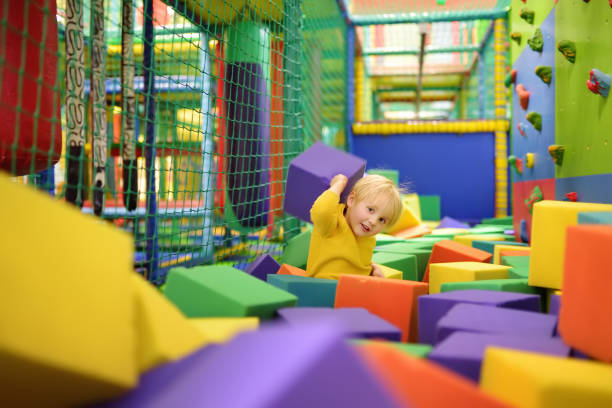
Cute little boy plays with soft cubes in the dry pool in play center. Kid playing on indoor playground in foam rubber pit in trampoline. Cute little boy plays with soft cubes in the dry pool in play center. Kid playing on indoor playground in foam rubber pit in trampoline. Child having fun in entertainment center. Kids Play Center stock pictures, royalty-free photos & images

Playgroups That Foster Imagination and Creativity in Young Minds

Playgroups provide a nurturing environment where children are encouraged to explore, imagine, and create. These centers offer an array of activities that stimulate young minds, allowing kids to express themselves while developing critical skills they will use throughout their lives. Fostering imagination and creativity at an early age is crucial for brain development, problem-solving skills, and emotional well-being. Below, we’ll look at how playgroups achieve this and examine the benefits for young children.

Activities That Spark Creativity

Playgroups often organize structured and unstructured activities specifically designed to boost imagination.

  • Painting with different mediums (watercolors, finger paints).
  • Crafting projects using recyclable materials like paper rolls or cardboard.
  • Clay sculpting to create shapes or objects from their imagination.
  • Dress-up corners with costumes such as doctors’ coats, firefighter uniforms, or fantasy characters like pirates or princesses.
  • Role-playing various scenarios such as running a pretend grocery store or playing family roles in a dollhouse setting.
  • Encouraging kids to create their own stories through picture prompts or props.
  • Hosting puppet theater where the children design puppets and act out stories.
  • Using blocks, LEGO sets, or magnetic tiles for designing structures like towers or bridges.
  • Encouraging collaboration when constructing larger projects in groups.

These activities not only entertain kids but also teach them how to think independently while working on fine motor skills.

Benefits of Imagination-Focused Activities

Benefit Description
Problem-Solving Skills Tackling challenges through imaginative tasks (e.g., building stable towers).
Emotional Expression Children learn to articulate emotions through art forms like drawing or storytelling.
Social Development Collaborating with peers fosters communication skills while building empathy.
Cognitive Growth Creative thinking enhances memory retention by engaging both hemispheres of the brain.

These benefits align closely with early childhood benchmarks necessary for academic readiness later on.

How Playgroup Environments Nurture Creativity

  1. Open-Ended Materials– The use of toys without predefined purposes (e. g. , wooden blocks rather than electronics) encourages children to invent new uses for items based on their own ideas.
  2. Safe Spaces– A supportive setting where children feel comfortable experimenting without fear of failure enables greater innovation.
  3. Encouragement from Educators– Skilled facilitators guide children’s creativity by asking open-ended questions such as “What else could this be? ” rather than providing direct solutions.
  4. Collaborative Tasks– Group activities allow children to share ideas while learning from peers’ perspectives.

Playgroups designed with creativity in mind help nurture lifelong skills that go beyond academics—skills such as resilience, adaptability, and innovation which are invaluable in today’s world.

How Playgroup Activities Build Self-Confidence in Children Early On

Playgroup activities are vital in helping children develop self-confidence during their early years. These formative experiences create an environment where kids can explore, interact, and grow emotionally and socially. By participating in structured and unstructured play within a group setting, children gain skills that significantly boost their self-esteem.

Encouragement Through Social Interaction

One of the primary ways playgroups build self-confidence is through peer interaction.

  • Learn to share toys and space
  • Develop communication skills by expressing their needs and desires
  • Navigate social challenges such as taking turns or resolving small disagreements

These experiences teach kids how to interact positively with others, enabling them to feel more confident in social situations.

Opportunities for Decision-Making and Leadership

Many playgroup activities encourage decision-making, which helps nurture independence and confidence.

  • Choosing from different games or activities fosters autonomy.
  • Leading group tasks such as organizing a puzzle or coordinating a role-play game strengthens leadership qualities.

These opportunities empower children to trust their instincts and take initiative in various contexts.

Skill Development Through Play-Based Learning

Hands-on activities offered at playgroups allow children to master new skills while having fun.

Activity Skill Developed
Building blocks Problem-solving and fine motor skills
Art projects (painting) Creativity and hand-eye coordination
Storytime Listening comprehension
Group singing Language development

As they complete tasks independently or with minimal help, children begin to believe in their abilities, which enhances their sense of competence.

Positive Reinforcement from Caregivers

Playgroups often involve caregivers or instructors who provide positive feedback during activities. This encouragement reinforces children’s efforts rather than focusing solely on outcomes.

  • Praising a child for attempting difficult tasks
  • Acknowledging acts of kindness toward peers
  • Celebrating small achievements like completing a craft project

Such affirmations teach children that effort is valuable and bolster their confidence over time.

Role Play for Building Emotional Resilience

Role-playing games are popular in playgroups and serve as an excellent tool for building resilience.

  • Introducing themselves to someone new
  • Asking for help when needed
  • Problem-solving challenges like fixing a toy together

This simulated practice encourages confidence when facing similar experiences outside the playgroup environment.

Benefits Beyond Early Childhood

The self-confidence developed through playgroup participation carries over into later stages of life. As they transition into school settings, confident children find it easier to adapt socially, take on academic challenges, and embrace new opportunities without hesitation.

Providing young minds with access to thoughtfully designed playgroup activities creates an empowering foundation upon which they can build lasting self-assurance.

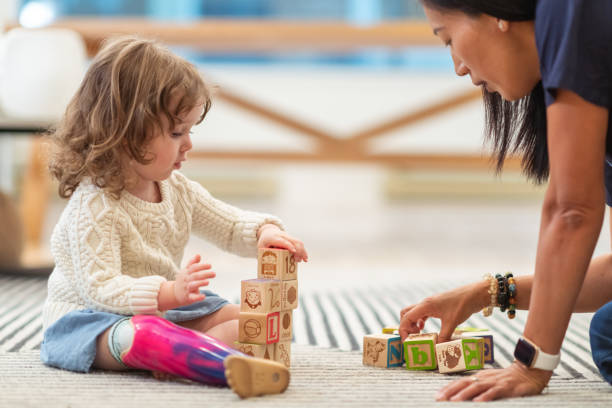
Little girl with prosthetic leg at occupational therapy appointment A preschool age girl with a prosthetic leg is at a medical appointment. The child is meeting with her physical therapist. The child is sitting on the floor building with wooden toy blocks. The medical professional is sitting on the floor assisting the girl. Kids Play Center stock pictures, royalty-free photos & images

Playgroups as a Foundation for Physical Activity and Healthy Growth in Kids

Playgroups are an essential part of a child’s early development, offering structured and unstructured opportunities for physical activity. Regular participation in these activities not only promotes healthy growth but also lays the groundwork for lifelong habits that contribute to overall wellness. Here’s how playgroups serve as an effective foundation for physical health and development.

Benefits of Physical Activity at Playgroups

  • Improved Motor Skills
    Activities such as running, jumping, climbing, and balancing help children improve their gross motor skills. Fine motor activities like drawing or manipulating small objects can also enhance dexterity.
  • Bone and Muscle Development
    Weight-bearing exercises such as climbing or hopping encourage stronger bones and muscles during crucial growth stages.
  • Cardiovascular Health
    Activities involving active play—like tag or obstacle courses—not only boost endurance but also improve cardiovascular health by keeping the heart strong.
  • Healthy Body Weight
    Regular movement helps maintain a healthy body weight and reduces the risk of childhood obesity.

Examples of Physical Activities at Play Centers

A variety of physical tasks are integrated into kids’ play centers.

Activity Type Examples Developmental Benefit
Gross Motor Activities Obstacle courses, jumping games Enhances coordination and strength
Balance & Stability Tasks Balance beams, wobble boards Improves balance and core stability
Sensory Movement Soft play areas with padded structures Encourages exploration in safe spaces
Team-Based Play Group relay races, cooperative games Builds teamwork skills alongside fitness

Establishing Healthy Habits Early

  1. Encouraging Regular Movement: Structured daily schedules incorporate active breaks to ensure children stay physically engaged.
  2. Promoting Outdoor Play: Exposure to outdoor settings helps children appreciate nature while staying physically active.
  3. Modeling Positive Behaviors: Facilitators often demonstrate healthy habits like stretching before activities or hydrating regularly.

Social Benefits of Active Play in Groups

Physical activity within a group setting doesn’t just benefit the body—it fosters teamwork, communication, and empathy among peers. Children learn to take turns during games, cooperate to complete tasks, and celebrate successes together.

Tips for Parents

  • Look for centers with age-appropriate equipment designed for safety.
  • Ensure adequate supervision by trained staff who understand developmental milestones.
  • Encourage participation without undue pressure to perform competitively.
  • Discuss their favorite activities post-playgroup sessions to reinforce positive experiences.

By integrating regular physical activity in a fun and engaging manner, playgroups offer children the foundation they need for both mental wellness and robust physical health in their formative years.

Boosting Cognitive Growth at a Kids Indoor Playground Through Play

Kids play centers are more than just spaces for fun and entertainment; they are hubs of cognitive development where children can unlock their full potential through structured and unstructured play. Let’s explore how these centers contribute to unlocking cognitive growth in children.

The Role of Play in Cognitive Development

Play is one of the most effective ways for children to learn.

  • Practice Decision-Making: Activities like puzzles, building blocks, or strategic games encourage kids to make decisions independently.
  • Develop Problem-Solving Skills: Trial-and-error games help children analyze situations and find solutions on their own.
  • Enhance Memory: Many play-based activities require recalling sequences or patterns, which boosts memory retention over time.

Types of Cognitive Activities at Kids Play Centers

Play centers often incorporate a wide variety of activities that cater to diverse aspects of cognitive development.

Activity Type Cognitive Benefits Examples
Building & Construction Enhances spatial awareness and planning LEGO® blocks, magnetic tiles
Pretend Play/Roleplay Fosters creativity and perspective-taking Dress-up stations, play kitchens
Puzzles & Brain Games Boosts problem-solving skills Jigsaw puzzles, memory-matching games
Interactive Technology Develops critical thinking Touchscreen learning tools

These activities not only promote intellectual growth but also keep children engaged in meaningful ways.

The Science Behind Play-Based Learning

Research has consistently shown that play stimulates brain development by strengthening neural connections.

  • Executive Functioning Skills: Activities requiring focus and multitasking help enhance skills like impulse control and flexible thinking.
  • Language Development: Collaborative games encourage communication, vocabulary building, and storytelling.
  • Symbolic Thinking: Pretend play allows children to use objects symbolically (e. g. , a block as a phone), which is a precursor to abstract reasoning.

Benefits Beyond Cognitive Growth

While the focus is on cognition, the benefits extend far beyond mental development.

  • Children develop social skills by working together with peers during group activities.
  • Emotional intelligence is nurtured as they learn empathy through pretend-play scenarios.
  • Physical coordination improves as many cognitive tasks integrate movement-based components.

Tips for Choosing a Kids Play Center Focused on Cognitive Growth

When selecting a play center for your child’s development needs:
1. Look for diverse activity options that balance fun with learning opportunities.
2. Ensure it provides age-appropriate challenges that stimulate curiosity without overwhelming your child. 3. Check if trained staff are available to guide activities while fostering independence.

By integrating purposeful play into daily routines at kid-friendly spaces designed for learning, parents can help lay the foundation for lifelong intellectual growth while creating joyful memories along the way.